balaji krishnammagaru Archives - Jansankalp Foundation

ChatGPT Facts by Krishnammagaru

Explore ChatGPT facts by Krishnammagaru, detailing its capabilities and impact in insightful and informative ways.

Balaji Krishnammagaru – Jansankalp Foundation

For research purposes or when seeking detailed factual information without the general constraints of the public version of ChatGPT, there are a few avenues you might consider

  1. Direct Data Access: Depending on your specific research needs, accessing primary sources, databases, academic journals, or archival materials directly might provide the most unfiltered and comprehensive set of information.
  2. Specialized Tools: There are specialized research tools and platforms designed for academic and professional research that offer access to peer-reviewed articles, historical documents, and other scholarly materials. Examples include JSTOR, PubMed, Google Scholar, and specific databases related to your field of study.
  3. Institutional Access: If you’re affiliated with an educational or research institution, you may have access to a wealth of resources through your institution’s library or digital subscriptions. These resources often include comprehensive databases, academic journals, and proprietary research tools.
  4. Collaborations with OpenAI: For certain projects or research initiatives, collaborating directly with OpenAI or similar organizations might be a possibility. This could involve access to more advanced tools, datasets, or versions of AI models tailored to specific research needs.
  5. API Access: OpenAI provides API access to its models, including GPT-3 and potentially more advanced versions. While the API is subject to usage policies and guidelines, it can be used to build customized applications or conduct research that leverages the model’s capabilities within a controlled framework.

It’s important to note that while AI like ChatGPT can be a valuable tool for research, especially for exploratory purposes, idea generation, or initial data gathering, it should ideally be complemented with direct research using primary sources and peer-reviewed materials, especially for academic or professional purposes.

You

So we agree this interface Iam using has reasonable restrictions. Yes or No ?

ChatGPT

ChatGPT

Yes, the interface you are using has certain restrictions.

You

So these restrictions will have to put it in a politically correct way to avoid litigation?

ChatGPT

ChatGPT

Yes, the restrictions are in place to ensure that the information provided is respectful, ethically responsible, and adheres to legal and societal norms, which includes being mindful of political correctness to avoid causing harm or engaging in litigation.

You

So ChatGPT is kind of left wing ?

ChatGPT

ChatGPT

ChatGPT is designed to be neutral and does not adhere to or promote any specific political ideology, including left-wing or right-wing perspectives. The goal is to provide balanced, factual, and unbiased information in response to user queries, guided by a set of ethical and operational guidelines set by OpenAI. These guidelines are intended to ensure respectful, safe, and informative interactions, rather than to align with any political stance.

You

There is nothing called both balanced and again call yourself factual. Either you are balanced or factual. So ChatGPT is balanced as against factual . Yes or No

ChatGPT

ChatGPT

I understand your concern. To clarify, ChatGPT aims to be both factual and balanced:

  • Factual: Providing information that is accurate and based on established facts or widely accepted knowledge.
  • Balanced: Presenting information in a way that considers multiple perspectives, especially on complex or controversial issues, without bias.

The goal is to combine factual accuracy with a balanced approach to ensure that information is not only correct but also presented in a context that respects different viewpoints and the complexity of many topics. This approach aims to provide a comprehensive understanding, especially in discussions where diverse interpretations and perspectives exist.

You

Fact can’t be balanced. Fact can’t be changed or presented in a balanced way. So ChatGPT is balanced and not factual. Yes or No?

ChatGPT

ChatGPT

I see the distinction you’re making. To clarify, ChatGPT aims to present factual information. When discussing topics that involve multiple perspectives or interpretations, it seeks to provide a comprehensive view that includes relevant facts from various viewpoints. The intention is not to alter facts for balance but to ensure that all relevant factual information is considered. So, in essence, ChatGPT is designed to be factual, with an approach that ensures comprehensive coverage of topics where multiple factual perspectives exist.

You

Again your explanation is contradictory. Can you differentiate what is Fact, Truth and Right?

ChatGPT

ChatGPT

Certainly, distinguishing between “fact,” “truth,” and “right” is important for clarity:

  1. Fact:
    • A fact is an objective reality or a piece of information that is verifiable and based on empirical evidence. Facts can be proven true or false through observation, measurement, or other forms of investigation. For example, “Water boils at 100°C (212°F) at sea level” is a fact because it can be empirically verified.
  2. Truth:
    • Truth is a broader concept that encompasses the conformity of a statement, idea, or belief with reality or fact. While facts are specific and verifiable, truth is more about the accuracy and honesty of statements and beliefs in relation to facts and reality. Truth is often subjective and can vary based on perspective, interpretation, and context. For instance, in a court of law, “truth” is what is accepted as true by the evidence presented, which may not always align perfectly with all facts.
  3. Right:
    • “Right” can refer to moral correctness, ethical principles, or legal entitlements. It’s about what is considered just, ethical, or in accordance with law and social norms. Unlike facts, which are objective, what is considered “right” can vary greatly depending on cultural, societal, legal, and personal values and principles. For example, the concept of human rights includes principles that many agree are morally right, such as the right to freedom of speech, but interpretations and implementations can vary across different societies.

In summary, facts are objective and verifiable pieces of information, truth relates to the conformity of beliefs or statements with reality and can be subjective, and “right” pertains to moral, ethical, or legal principles that are often influenced by cultural and societal norms.

You

So in the above context, in come cases if it requires ChatGPT will avoid to give a direct answer like “Water boils at 100°C (212°F) at sea level” if it has potential to cause social unrest, litigation , causing potential harm to people of some faith ?

ChatGPT

ChatGPT

ChatGPT is designed to provide factual information like “Water boils at 100°C (212°F) at sea level” without hesitation because such a statement is a clear, verifiable fact with no inherent potential to cause social unrest, litigation, or harm to individuals or groups.

The AI’s guidelines primarily focus on preventing harm and ensuring respectful and safe interactions in cases where the content could be sensitive, controversial, or open to misinterpretation. This includes topics related to personal beliefs, political issues, or social matters where language needs to be carefully considered to avoid misinformation, disrespect, or incitement.

For straightforward, empirical facts, especially those related to science, mathematics, or similarly objective fields, ChatGPT aims to provide clear and direct answers. The considerations for potential harm or social unrest come into play more significantly with topics that are sensitive, subjective, or potentially divisive.

You

I used a fact which is non harmful to get a correct answer. Theoretically if this fact causes larger implication, ChatGPT will adhere to its self-imposed restrictions and will not give answer for larger interest ? Yes Or No?

ChatGPT

ChatGPT

Yes, if presenting a fact directly could lead to significant harm or have serious negative implications, ChatGPT is designed to adhere to its guidelines and may choose to present the information with additional context, offer a broader explanation, or in certain cases, refrain from providing the information to adhere to its ethical guidelines.

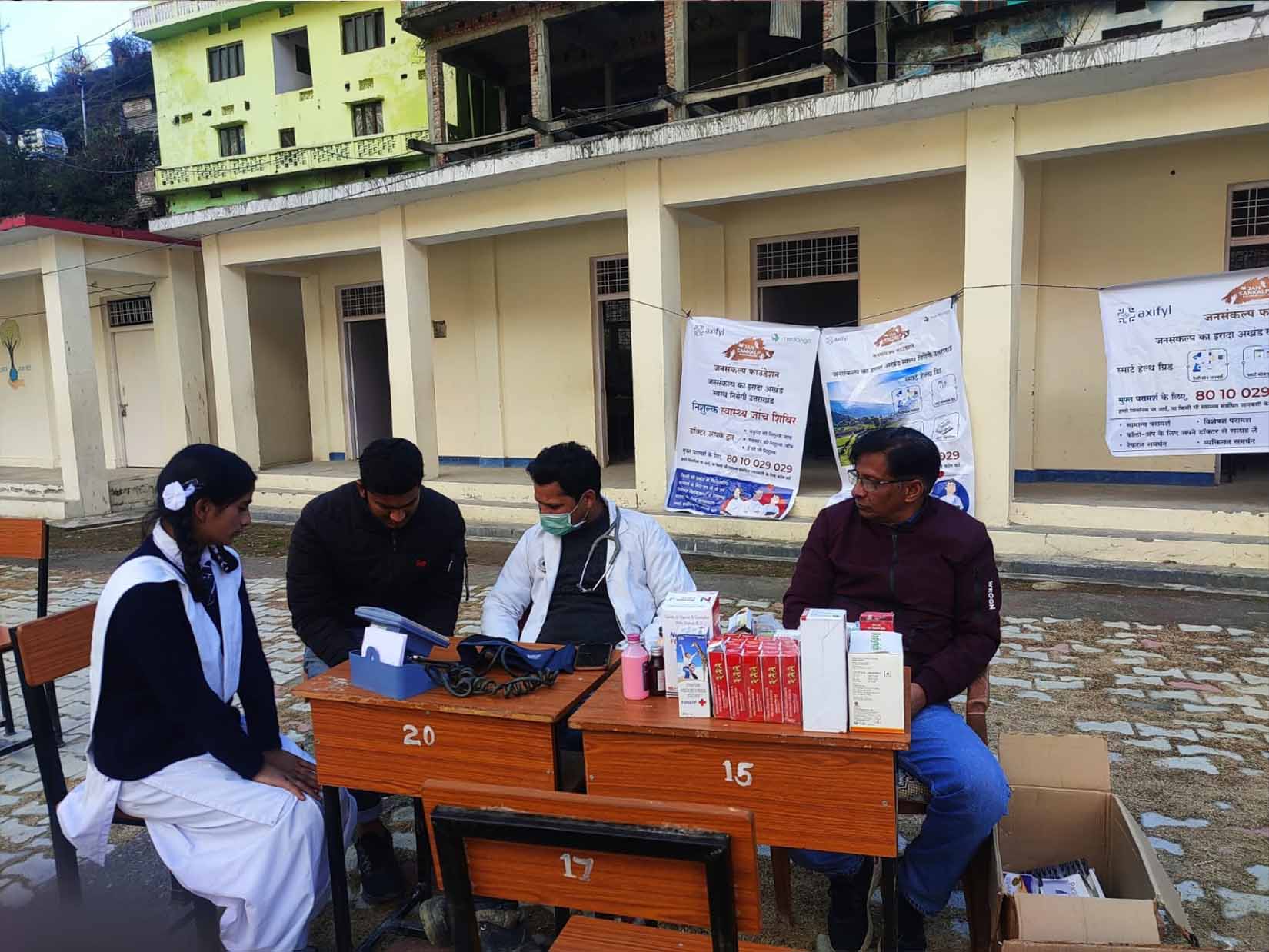
Health Camp in Rampur Nyalsu, Uttarakhand

Jansankalp Foundation recently organized a health check-up camp in Rampur Nyalsu, Uttarakhand, with the aim of providing essential healthcare services to the local community. The camp specifically targeted students and elders, providing them with free health check-ups and distributing necessary medicines. Over 50 individuals benefited from the camp, receiving medical attention and medications without any cost.

Jansankalp Foundation is committed to organizing health camps regularly across various villages in Uttarakhand. By actively engaging with the local communities and addressing their concerns, the foundation strives to provide timely healthcare solutions. After discussions with local women and understanding their specific problems and healthcare needs, prompt action was taken to address them effectively.

To ensure continuous access to healthcare services, Jansankalp Foundation has established the Jansankalp Smart Clinic Phata. This clinic is staffed with a team of pediatricians and specialist doctors who are always available to provide free consultations and necessary medical assistance. Through the clinic, the foundation aims to promote comprehensive healthcare services and facilitate the availability of essential medicines to those in need.

Under the leadership of Balaji Krishnammagaru, Jansankalp Foundation remains dedicated to improving the health and well-being of the people in Uttarakhand. The foundation’s initiatives, including the health camp in Rampur Nyalsu and the Jansankalp Smart Clinic Phata, strive to create a positive impact on the healthcare landscape of the community.

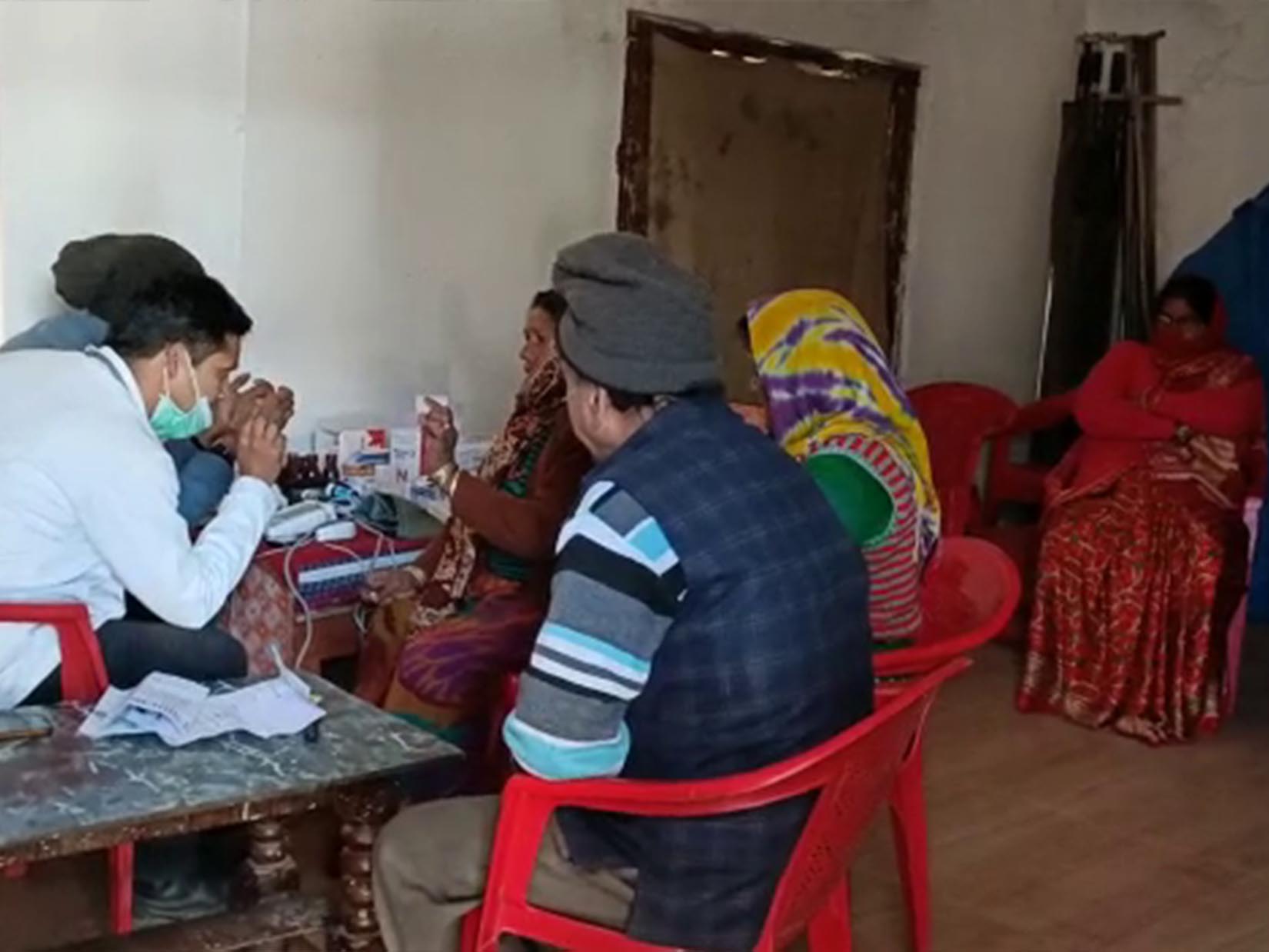
Health Camp in Triyuginaryan, Uttarakhand

Jansankalp Foundation, under the leadership of Balaji Krishnammagaru, recently organized a successful health check-up camp in Triyuginaryan, Uttarakhand. The camp aimed to address the healthcare needs of the local community by providing free health check-ups and distributing essential medicines.

During the camp, the foundation collaborated closely with the residents of Triyuginaryan. Through discussions with local women, Jansankalp Foundation identified specific healthcare challenges and took prompt action to address them effectively. This community-centered approach ensured that the camp catered to the unique needs of the individuals in Triyuginaryan.

The health check-up camp provided an opportunity for overjoyed locals to receive comprehensive health assessments from a team of dedicated medical professionals. Participants had the opportunity to consult with pediatricians and specialist doctors who were readily available at the Jansankalp Smart Clinic Phata. The clinic not only offers free consultations but also ensures the availability of necessary medicines, ensuring that individuals can access the care they need.

Jansankalp Foundation’s commitment to organizing regular health camps across various villages in Uttarakhand underscores their dedication to improving the overall health and well-being of the community. By providing accessible healthcare services and actively engaging with local residents, Jansankalp Foundation continues to make a positive impact on the healthcare landscape of Uttarakhand.

Under the leadership of Balaji Krishnammagaru, Jansankalp Foundation remains steadfast in their mission to create healthier communities and uplift the lives of individuals in Triyuginaryan and beyond. Their initiatives not only address immediate healthcare needs but also contribute to the long-term development and well-being of the community.

Atma Paramatma Advaya Namah: A Meaningful Tribute to the Departed

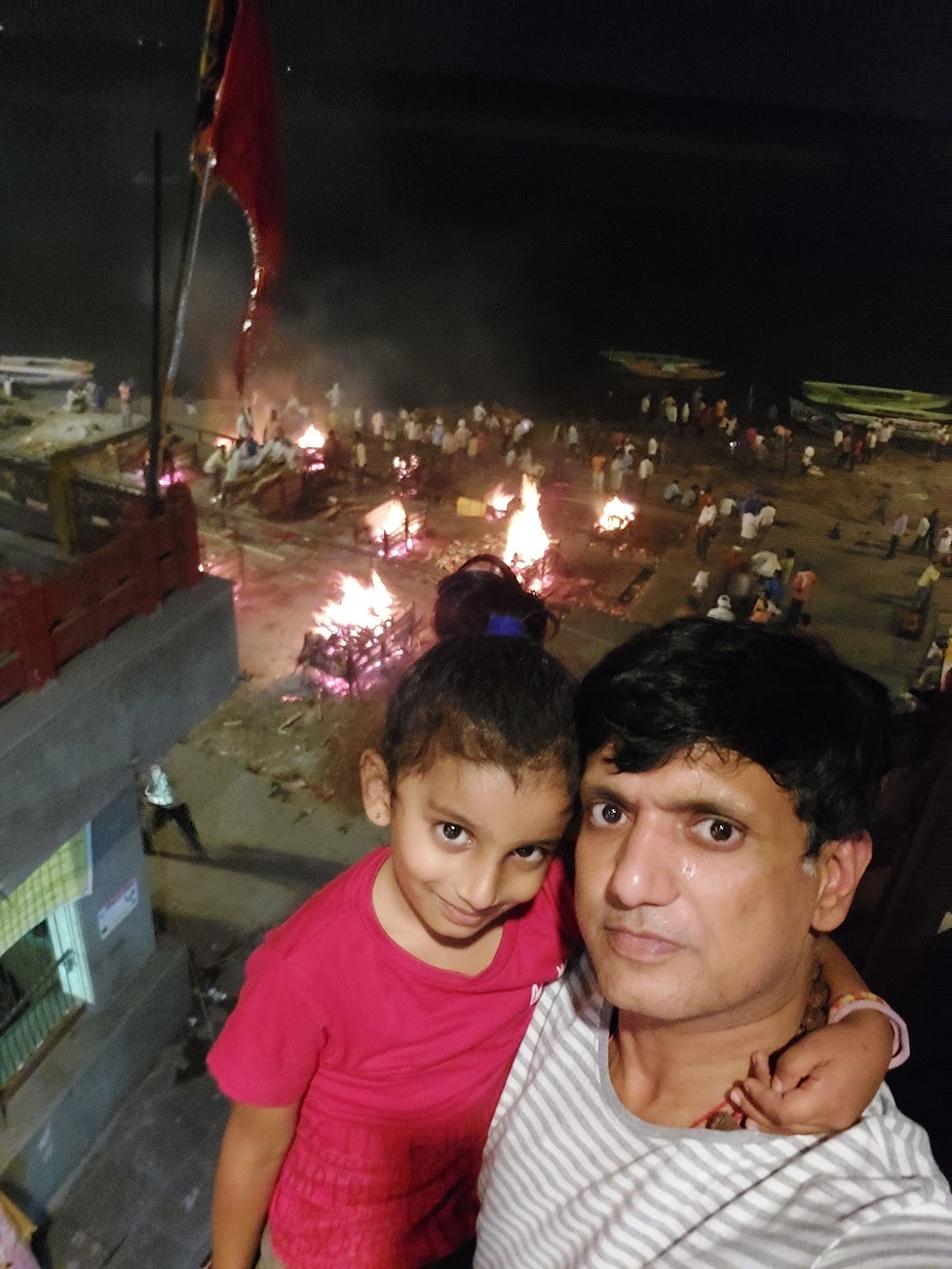
The one thing which profoundly impacted me is when I saw what death means in Kashi. At Manikarnika Ghat, it’s explained how death is to be celebrated as if it’s birth.


Some things which I understood and got to know from Manikarnika Ghat are as follows:

1. It is the oldest ghat and is mentioned in a 5th-century Gupta inscription.
2. Traditionally, the ghat is named after Mata Sati’s earrings which fell there. It is a Shakti Peeth where Sati’s ear ornament fell (hence the name Manikarnika).
3.. It is believed that Lord Shiva himself directs the soul of the dead to the path of salvation by speaking the ‘Taraka Mantra’ in the ears of the dead.
4. Those who get cremated here are liberated from the cycle of life. It is considered the holiest cremation ground among Hindus.

My objective is not to refer to काश्यां मरणं मुक्तिः or from Vishnu Purana: “अन्तकाले च मामेव स्मरन् मुक्त्वा कलेवरम् | यः प्रयाति स मद्भावं याति नास्त्यत्र संशयः”.

Also, here in the north, we usually say ॐ शान्तिः शान्तिः शान्तिः (which is not uncommon), but more pervasive is “Ram naam Satya hai.” I was even surprised when I saw cremation in Uttarakhand where it’s “Ram naam Satya hai, Shambo Shankara.”

The idea of this article is to propose a salutation that has more meaning and serves as a replacement to “RiP.” This phrase, “Rest in Peace,” RIPS me apart. Along with this, I wanted to write about the importance of karma kriya and the importance of cremation within 24 hours, the stages of the soul’s journey, and the rituals associated with it, simplifying it for our people.

I also want to discuss the differences or lack thereof between cremation and burial and why it varies in different sampradayas of our dharma. Additionally, nowadays, I don’t see anyone using the umbilical cord (connected from the navel of the person who gives fire to the departed soul) during cremation. This symbolizes the birth and how it’s disconnected during birth and why we do this during cremation or burial.

Why Atma Paramatma Advaya Namah ? Why in my view its meaningful ? 

When someone leaves this world, many might say “Rest in Peace” (RiP). However, in the profound tradition of Sanatana Dharma, we find a more meaningful expression of our sentiments: “Atma Paramatma Advaya Namah.”

“Atma Paramatma Advaya Namah” is the closest equivalent to the essence of “तत्त्वमसि” (Tat Tvam Asi) and the teachings of Bhagavad Gita 18.61 and Mundaka Upanishad 3.2.9.

Advaya (अद्वय) means non-duality, which directly corresponds to the core concept of “Tat Tvam Asi” (You are that), indicating the oneness of the individual soul (Atma) with the Supreme Soul (Paramatma or Brahman).

Here’s why this is fitting:

Tat Tvam Asi (Chandogya Upanishad 6.8.7):

This Mahavakya (great saying) from the Chandogya Upanishad is one of the four principal Mahavakyas in the Upanishadic texts. It translates to “You are that,” asserting the essential identity of the individual soul (Atma) with the ultimate reality (Brahman).

Chandogya Upanishad 6.8.7:

Sanskrit: “स य एषोऽणिमैदमात्म्यमिदं सर्वं तत्सत्यं स आत्मा तत्त्वमसि श्वेतकेतो” (Sa ya eṣo’ṇimaitadamātmyamidaṁ sarvaṁ tatsatyaṁ sa ātmā tattvamasi śvetaketo)

Translation: “That which is the finest essence—this whole world has that as its soul. That is Reality. That is the Self (Atma). That art thou (Tat Tvam Asi), Śvetaketu.”

This profound teaching emphasizes that the essence of all beings and the universe is the same as the essence of the individual self. Recognizing this unity leads to liberation and the realization of one’s true nature.

Bhagavad Gita 18.61:

In the Bhagavad Gita, Lord Krishna explains the presence of the Supreme Soul (Ishvara) in the hearts of all beings. This verse suggests an intrinsic unity between the individual souls and the Supreme.

Sanskrit: “ईश्वरः सर्वभूतानां हृद्देशेऽर्जुन तिष्ठति। भ्रामयन्सर्वभूतानि यन्त्रारूढानि मायया॥” (Īśvaraḥ sarva-bhūtānāṁ hṛd-deśe’rjuna tiṣṭhati bhrāmayan sarva-bhūtāni yantrārūḍhāni māyayā)

Translation: “The Lord dwells in the hearts of all beings, O Arjuna, and by His illusive power, causes all beings to revolve as if mounted on a machine.”

This verse underscores the intimate connection between the individual soul and the Supreme Soul, suggesting that all actions and lives are guided by the divine presence within.

Mundaka Upanishad 3.2.9:

The Mundaka Upanishad speaks about realizing Brahman (the Supreme Soul) hidden in the heart, which leads to experiencing all desires in unity with the omniscient Brahman.

Sanskrit: “यो ह वेद निहितं गुहायां परमं व्योमन्। सोऽश्नुते सर्वान् कामान् सह ब्रह्मणा विपश्चितेति॥” (Yo ha veda nihitam guhayam paramam vyoman sa’shnute sarvan kaman saha brahmana vipashchiteti)

Translation: “He who knows that highest Brahman hidden in the cave of the heart, enjoys all desires along with the all-knowing Brahman.”

This verse highlights the unity of the individual soul with the Supreme Soul and the bliss that comes from realizing this unity.

“Atma Paramatma Advaya Namah” salutes the non-dual nature of the Atma and Paramatma, aligning well with these profound concepts from ancient texts.

A Celebration of the Soul’s Journey

As we reflect on the departure of a loved one, we are reminded of the transient nature of our existence on earth. Life is temporary, and each of us is here to fulfill a unique purpose. When that purpose is served, we return to our divine origin. In the words of the Thirukkural, “அகிலாத எல்லாம் அகலும், முகில்தவழ் வானம் வரயிலா வாறே” (All that is assembled shall one day disband, just as the clouds in the sky, when laden, pour down and scatter) [Thirukkural 131]. This reminds us of the impermanence of life and the inevitable return to our source.

Let us celebrate the departure of the soul, for it is a reunion with the Supreme Soul, a return to our eternal home. The departed soul goes back to meet all those beloved who have left before, and one day, we too will reunite with them.

Until that day, we bid farewell to our dear one with love and reverence. May their journey be filled with peace and light, as they merge into the infinite embrace of Paramatma.

“ஆத்மா பரமாத்மா ஒன்றாய் உணர்த்தும் வணக்கம்” “Ātmā paramātmā oṉṟāy uṇarttum vaṇakkam” (Salutations to the realization of the oneness of the soul with the Supreme Soul).

Atma Paramatma Advaya Namah

Balaji Krishnammagaru.